Spokane and Spokane County, Washington
Biohazard and crime scene cleanup in Spokane
When there has been a death, a violent crime or a serious injury in a home or car, the cleaning should not fall to the family. One call connects you with an independent biohazard cleanup company that works in your part of Spokane.
Answered 24 hours a day, 7 days a week
- Crime scene and unattended death cleanup
- Blood, body fluids and odor
- Homes, rentals and vehicles
What happened
Choose the situation closest to yours
Each page explains what is involved, what to leave alone and what to ask.
- Crime scene and traumaAfter a homicide, an assault or a bad injury, once police have released the place.Read more
- Unattended deathWhen someone died alone and was not found for some time.Read more
- After a suicideQuiet, discreet cleanup so no one in the family has to do it.Read more
- Blood and body fluidsBlood, vomit, urine or feces after an injury, a fall or an illness.Read more
- Hoarding with biohazardsA packed home where waste, needles or rotting food are part of the problem.Read more
- Disinfection and rodentsRooms to disinfect after illness, or heavy mouse droppings in a cabin or shed.Read more
- Cars and trucksBlood or body fluids on seats, carpet or in the trunk of a vehicle.Read more
About this line
A phone number, not a cleanup company
This site does not send anyone to your door itself. It connects your call with an independent company that does crime scene and bio hazard cleanup in Spokane County and pays for the referral.
That company will talk you through what it would do and how it prices the job. You can ask for the work in writing, ask about insurance paperwork, or simply hang up and think it over.
Calls are answered 24 hours a day, 7 days a week.

What happens next
From the first call to an empty, clean room
Every job is different, but most follow this order.
- Right now
Make sure everyone is safe
If someone is hurt or you have just found someone who has died, call 911 first. Do not start cleaning. Leave the room as it is and keep children and pets out.
- First hours
Police and the Medical Examiner do their work
After a death or a violent crime, police and the Spokane County Medical Examiner decide when the place is released. Until then, nobody should clean.
- When released
Call this line
You are connected with an independent cleanup company that covers your ZIP code. Tell them what happened, which rooms are involved and whether it is a house, apartment or vehicle.
- On the phone
Ask your questions
How do they decide what has to be removed? How do they set the price? Will they photograph the work for an insurer or landlord? You decide whether to go ahead.
- First visit
Someone looks at the room
The company inspects in person, often with moisture meters, and explains what is affected beyond what you can see.
- Setting up
The area is closed off
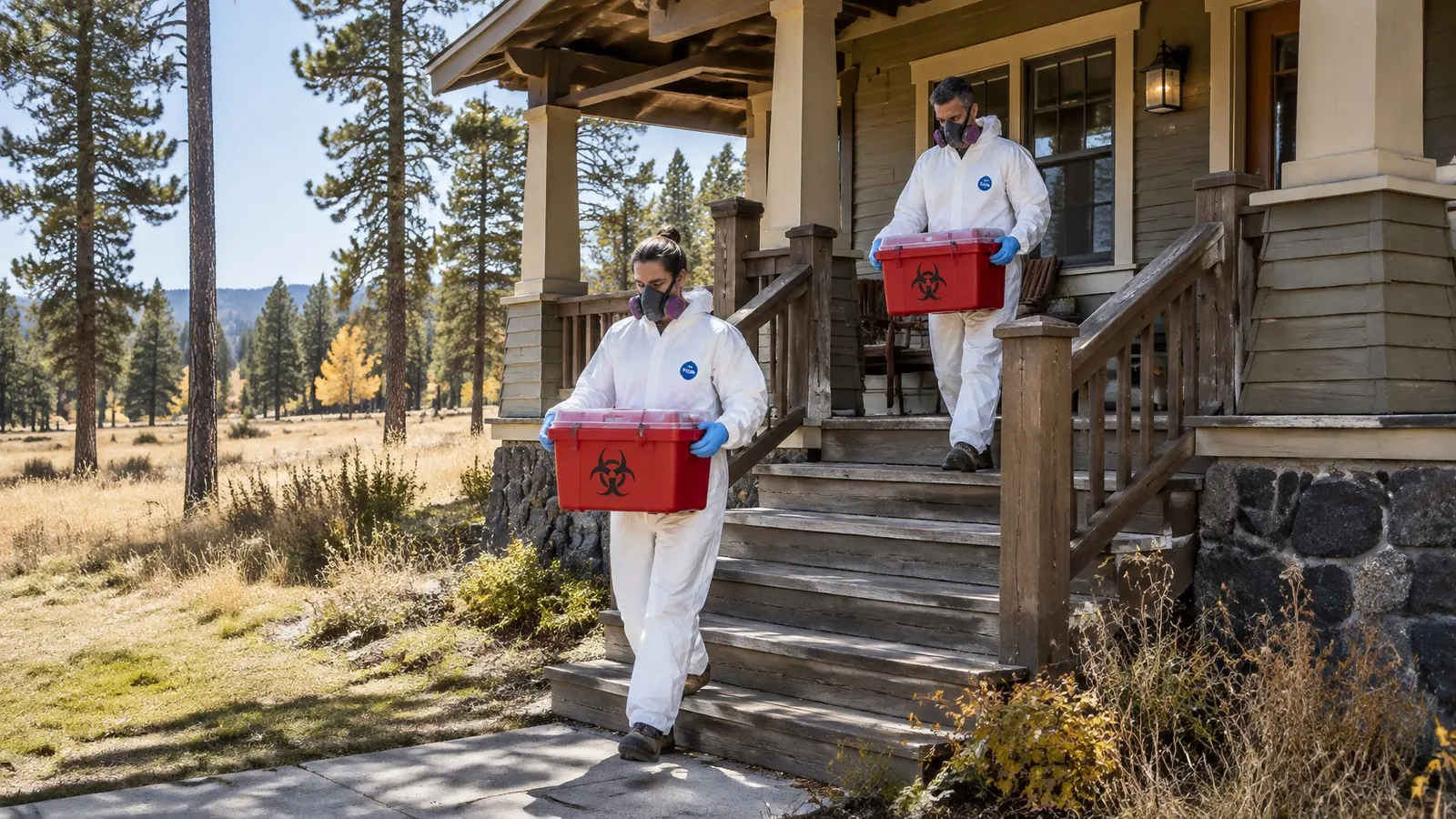
Doorways are sealed with plastic sheeting and the workers put on suits, gloves and respirators before anything is moved.
- Removal
Contaminated material is taken out
Carpet, pad, drywall or furniture that cannot be cleaned is cut out, sealed in marked containers and taken for proper disposal.
- Cleaning
Surfaces are cleaned, then disinfected
Hard surfaces are cleaned first and then treated with a disinfectant, left on for the time the product label requires.
- Odor
The air is treated
Where there was decomposition, odor treatment can take extra time. Ask the company how they will check that it is gone.
- Afterward
Paperwork and a final look
Ask for a written description of the work and photos. An insurer, landlord or estate will often want them.
Good to know in Spokane
Local facts, with sources
The Medical Examiner
Spokane County has a Medical Examiner rather than a coroner. The Spokane County Medical Examiner is at 102 S Spokane St, Spokane, WA 99202, phone (509) 477-2296.
Non-emergency police
In Spokane, Crime Check takes non-emergency reports at (509) 456-2233. For anything urgent, call 911.
Victim compensation
Washington’s Crime Victims Compensation Program lists crime scene cleanup among the things it does not pay for. It may help with funeral costs and counseling.
Mouse droppings
The Washington State Department of Health says not to sweep or vacuum rodent droppings, because the dust can carry hantavirus.
Around Spokane
Towns on this line
Spokane ZIP codes: 99001, 99201, 99202, 99203, 99204, 99205, 99207, 99208, 99212, 99223, 99224. Nearby towns have their own pages.
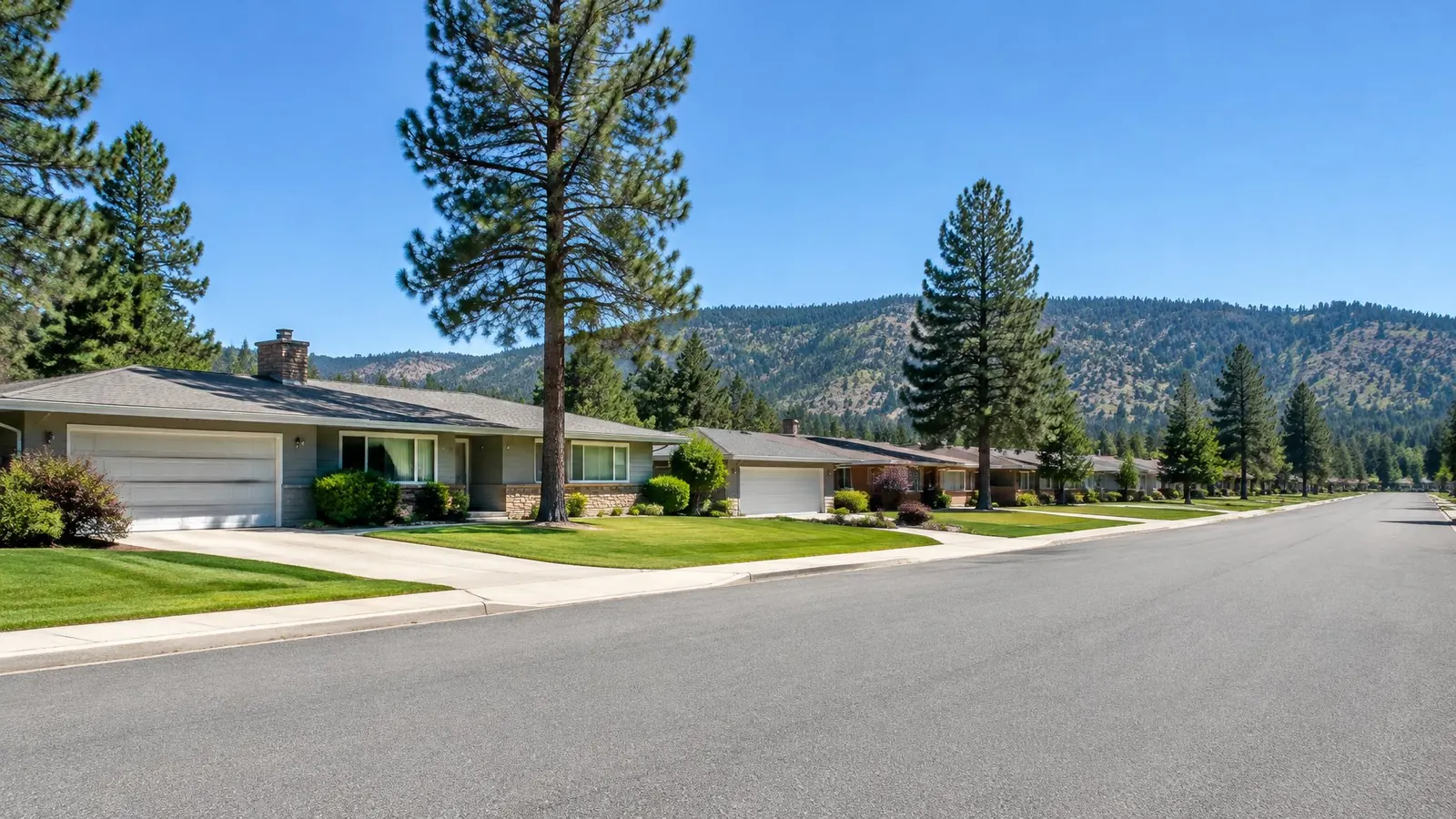 Spokane ValleyThe county's second-largest city, east of Spokane along I-90.ZIP 99206, 99212, 99216, 99016, 99037, 99027
 Liberty LakeA newer city at the eastern edge of the county, near the Idaho line.ZIP 99019
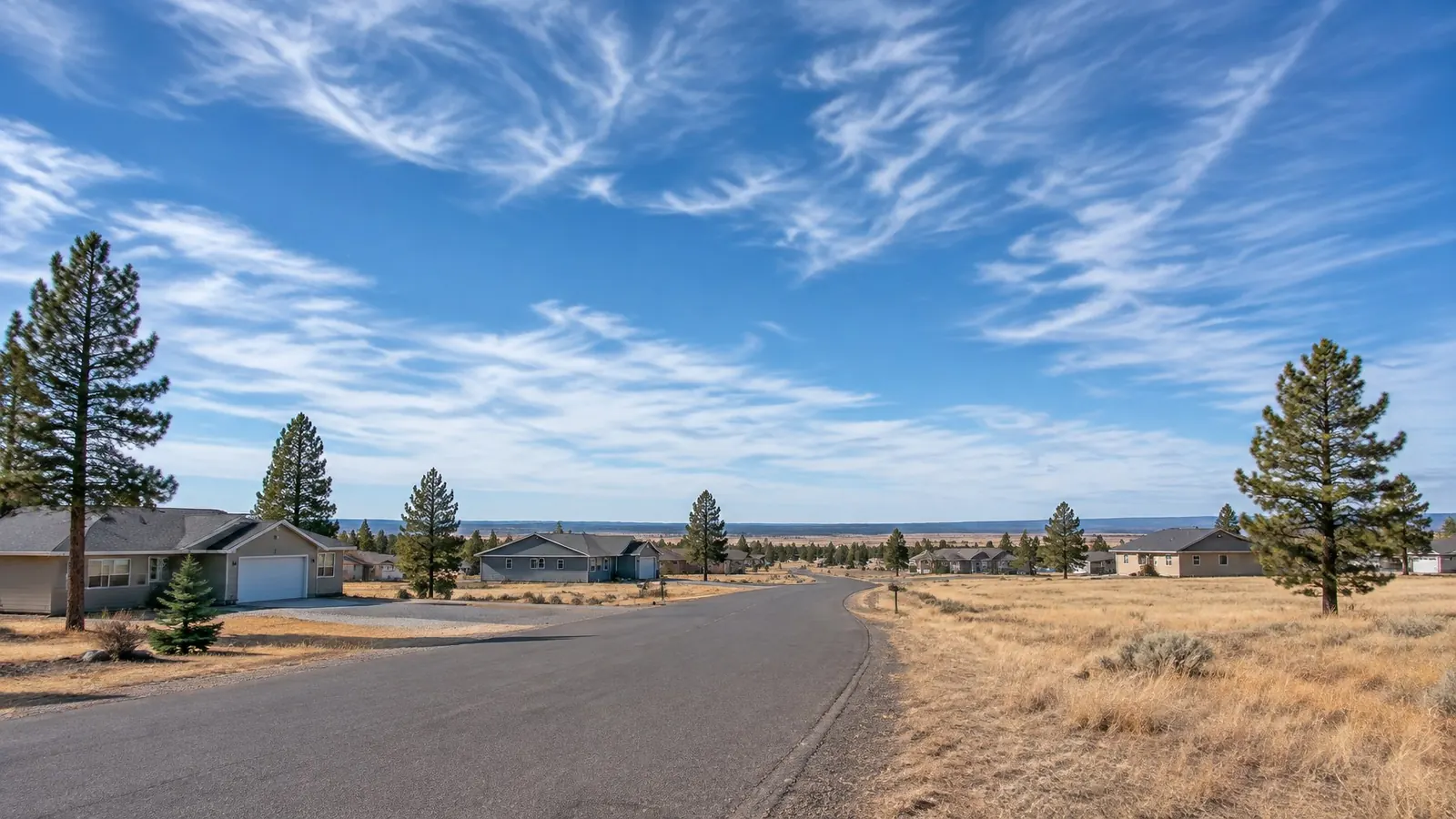 Airway HeightsOn the West Plains, between Spokane and Fairchild.ZIP 99001
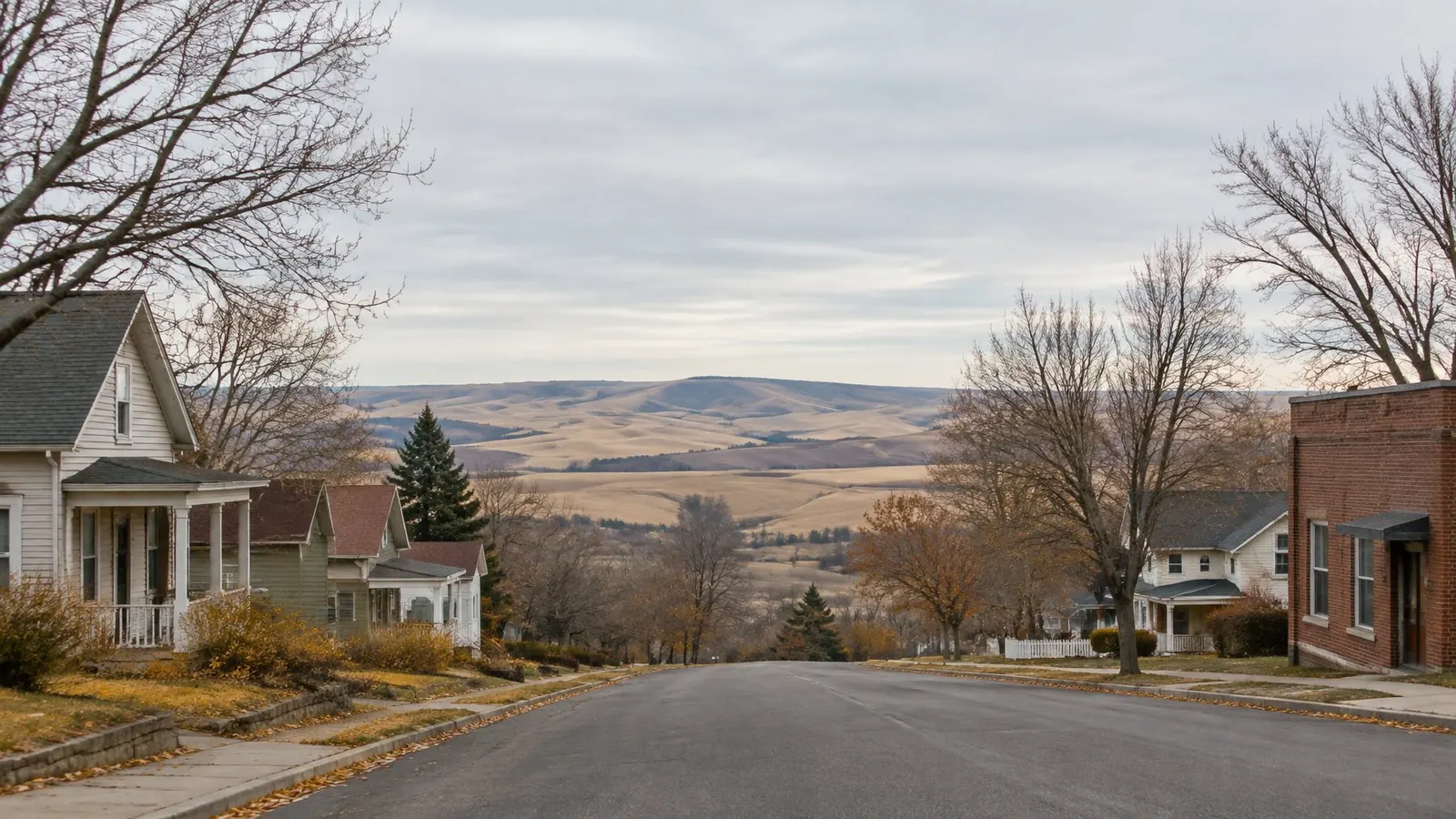 CheneyA college town southwest of Spokane, home of EWU.ZIP 99004
 MeadUnincorporated country north of Spokane.ZIP 99021
Questions
Common questions
Is this line answered at night?
Yes. Calls are answered 24 hours a day, 7 days a week.
Do I have to be there for the cleanup?
Usually not for the whole job. Someone has to let the company in and agree to the work, but many families hand over a key and stay elsewhere.
Can I clean it myself?
Small spills of blood can be handled with gloves and a disinfectant. Anything larger, or anything that has soaked into carpet, drywall or a mattress, carries a risk of bloodborne disease. Washington’s bloodborne pathogens rule exists because workers handling this material need training and equipment.
What does it cost?
It depends on how much material has to be removed, how many rooms are involved, how long it was before the person was found, and the disposal. The company sets the price after it sees the room.
Who pays for it?
Often a homeowner’s or renter’s policy, a landlord or the estate. Washington’s crime victims program does not. See who pays for the cleanup.
Whenever you are ready
You do not have to sort this out alone
Some families call the same evening. Others call after the service, or after talking with the landlord. Until then, keep the door to the room shut and leave the cleaning to people with the right protective gear.
Speak with a cleanup company
The call goes to an independent company that works in your ZIP code. Describe the room, ask how they would handle it and how they set the price. Nothing is agreed until you say so.
Call (509) 206-8076Answered 24 hours a day, 7 days a week
Calls may be recorded. Read the referral disclosure and the privacy policy.